
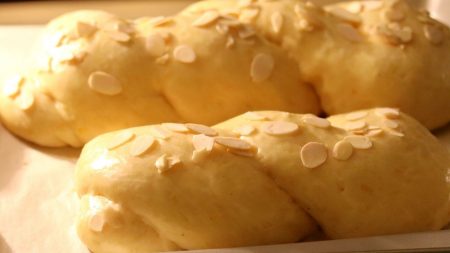
This is one of the most interesting Greek breads to bake. Just look at the ingredients, a list that includes eggs, milk, and butter: it’s an indulgent reminder of all the delicious elements that are traditionally out of the diet during Lent. But this bread is also a feast for the senses, flavored with mahlepi, the kernel of a specific type of cherry; mastiha, the resinous spice from Chios that is delightfully piney, and citrus zest, mostly lemon or orange.
There are variations on this bread across the Mediterranean, truly another food that unites us: Azerbaijan, Armenia, Romania, Bulgaria, and Turkey all have versions of tsoureki. And like most Greek recipes, it can differ from place to place within the country: in the Peloponnese, there’s moraia, the politiko, and Corfu’s fougatsa are just a few!
Below, I’m listing the tips you should keep in mind to make your Greek Easter tsoureki as perfect as possible:
1.The ingredients in this bread are very important, and that starts with the flour. Strong flour or high-gluten flour is recommended for tsoureki, and generally speaking, fresh yeast will give your loaf a nicer taste and aroma. However, if you decide to go the dry route, you can half the recommended amount.
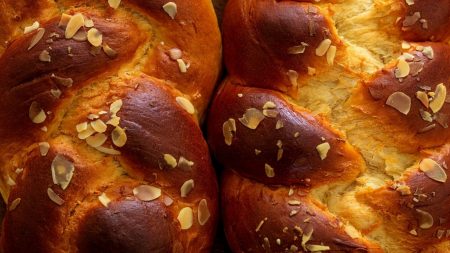
2.Regarding the spices: this is one time to go the fresh route. Buy your mahlepi in seed form and grind them up before baking, and get your mastiha in crystal form (pro tip for grinding mastiha: add a little sugar from the recipe to ensure that the mastiha doesn’t stick to everything). Once you’re ready to bake, pay close attention to the proportions of mahlepi and mastiha, to avoid ending up with a bitter bread!
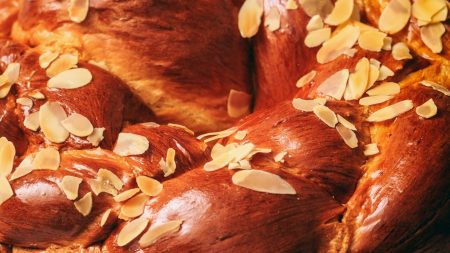
3.Tsoureki is a stretchy, fibrous bread. This doesn’t have to do with your ingredients – it all comes down to the kneading, so get ready to roll up your sleeves and get into it! If you have a mixer, expect this to take about 20 minutes, and double that if you’re doing it by hand. Don’t worry when your dough is sticky – that’s totally normal.
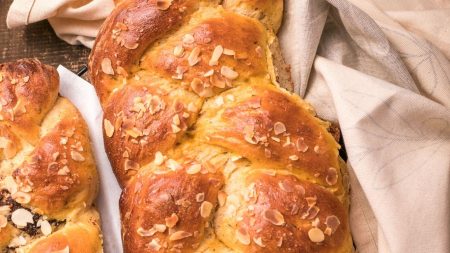
5.Another dough note: it has to go through a second rise, post-braid. And if you want to add a red hard-boiled egg into the plait, the right time to do so is between the first and second rise.
6.Once your tsoureki has baked, cover it with a towel and leave it in a warm place so that it can continue to rise in peace. And if you’re baking more than one, make sure you give ‘em a little space, so they don’t stick together!