
Spoon sweets are one of the most unique and versatile Greek confections. The term generally refers to a vast range of seasonal and regional fruits put up in a simple sugar syrup in such a way that the intense flavor and texture of each fruit is perfectly preserved. Fruit rinds, young, soft nuts, some young vegetables, and even flowers, mainly delicate, aromatic rose petals and lemon blossoms, are among the unusual ingredients that Greeks traditionally preserve.
The custom is very old. Ancient Greek and Byzantine literature is filled with references to fruits preserved either in honey or petimezi (grape molasses) – the world’s oldest sweeteners. To this day, in some parts of Greece, there are local recipes for preserving the likes of pumpkin and baby eggplant in grape molasses.
The first spoon sweets to be preserved in sugar syrup appeared in the haute Byzantine kitchen and slowly became more widespread as sugar, brought to Greek shores by Arab traders in the 14th century, also became more readily available and economically accessible.
The spectrum of spoon sweets follows the seasons: quince and apples in the fall; bitter oranges, orange rind, lemons or lemon rind, bergamot, citrons, and grapefruits in winter; strawberries, apricots, and green, unripe figs in spring; watermelon rind, plums, cherries, sour cherries, and grapes in summer. A variation on the bitter orange spoon sweet calls for the small green unripe fruits to be put up whole in syrup; nuts are invariably preserved when immature, their shells still soft and downy; flowers, mainly rose petals and lemon blossoms, are two of the rarest, most delicious spoon sweets.
The art of making spoon sweets was de rigueur knowledge among women a generation or two ago, as the sweets were a way to preserve valuable seasonal ingredients before the era of refrigeration. More importantly, to this day, they are still thought of as the “hospitality” sweet, offered to guests as a gesture of welcome.
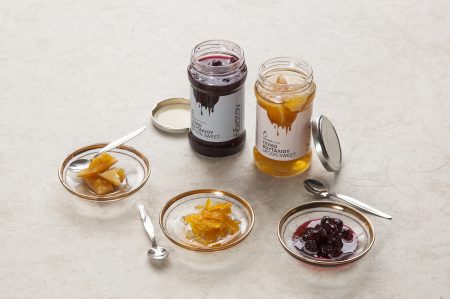
To serve: A teaspoon or two (hence the name) are typically served on small glass plates accompanied by a cool glass of water.
Spoon sweets, which have no fat, are one of the Mediterranean’s healthiest sweets, the confection that even Greek dieticians recommend for anyone with a sweet tooth who is trying to lose weight.
Versatility and Use:
Check out my online specialty Greek food shop for a taste of some amazing spoon sweets. Here’s a little info on each of them.