
Tomatoes are a true revelation, in the Greek diet and the Mediterranean diet more widely – Italy, Spain, and Israel certainly feature their fair share of tomato dishes. They’re a full sensory experience that bring together sight, smell, touch, and taste, and they run the gamut in flavors and textures, as a multi-varietal vegetable, but generally, you’ll find most tomatoes are sweet, acidic, juicy, and thick-skinned. They are the ultimate Mediterranean diet ingredient.The Greek diet would be unimaginable without them. They also, of course, figure prominently in the longevity recipes of Ikaria, the Blue Zone Greek island of my ancestry.
You might be surprised to learn that tomatoes first arrived in Greece in the early 19th century, when a Capuccine monk on Tripodon Street in Plaka planted the first tomato seeds – although it makes no mention of tomatoes being actually eaten. But in 1827, the first Greek-language cookbook (translated from an Italian book) mentions 2 recipes that use “golden apples,” the translation for the Italian word “pomodoro.” And their use in the kitchen only exploded from there.
It’s also believed that the same group of monks brought the cherry tomato to Santorini in 1875, initially cultivated as a necessary crop for locals, but in 1919, tomato cultivation picked up, and the unique flavor of these cherry tomatoes gained plenty of fans. The island is uniquely suited to growing divine tomatoes: they’re small, thick-skinned, and intensely flavored thanks to the island’s volcanic soil, which is sandy and dry.
Of course, this cherry tomato isn’t the only local variety you’ll find in Greece. There’s the beefsteak-like Vravrona variety, called “batala,” a thin-skinned tomato that is pink on the inside and has a sweet and sour taste. And of course, the bournelo of Chios, another small, intense tomato often seen drying in clusters in the south’s medieval mastic villages.
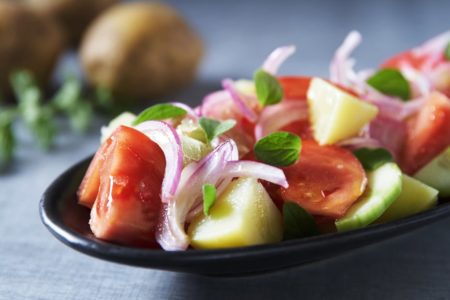
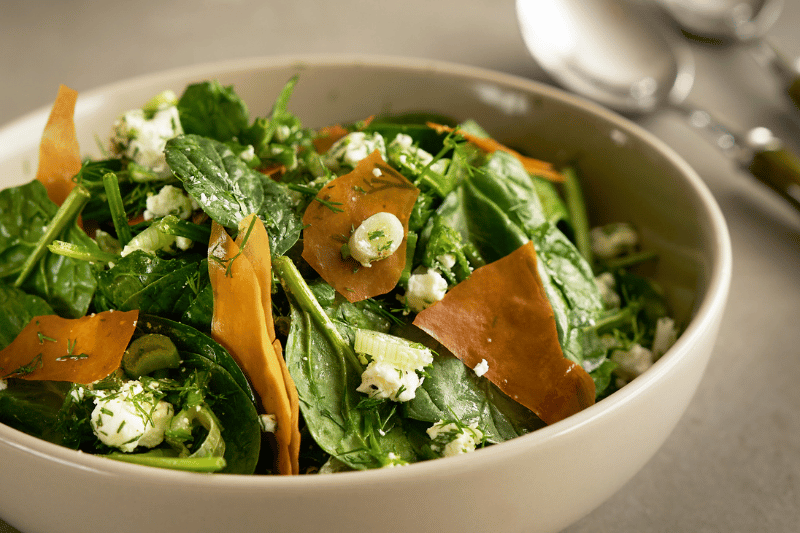
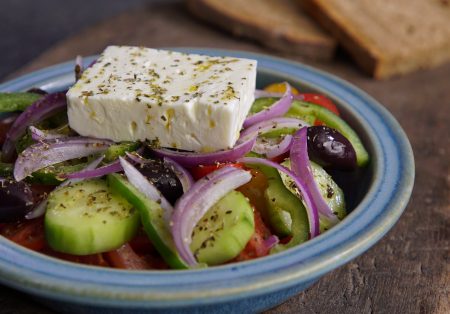
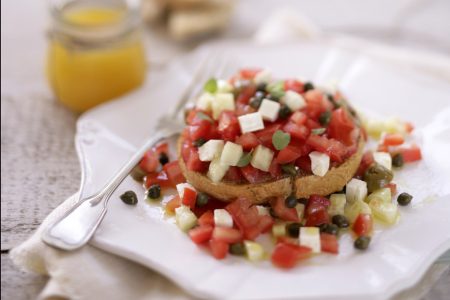
Ok, that’s enough tomato history! Let’s get into the many great ways to enjoy tomatoes. Since they’re basically synonymous with Greek summer, I think it’s best to talk about all the ways that a fresh, ripe, juicy tomato can be incorporated into salads, like the famous Horiatiki, or Greek salad, or a contemporary take on the dakos salad, made with barley rusks and apples. A gorgeous summer tomato can elevate a hum-drum potato salad, or it can top some seasonal greens in a purslane salad with lemon vinaigrette. And, perhaps the ultimate paean to summer: a Greek salad loaded with Santorini capers, Aegina pistachios, watermelon, peaches, and avocado.
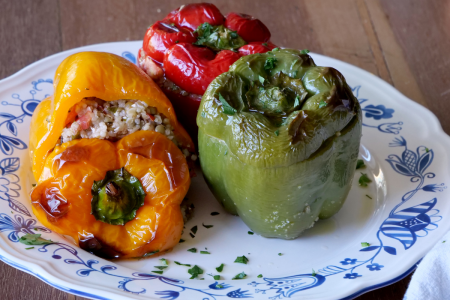
Then there are the many amazing ways to stuff tomatoes – would you guess they’re the perfect summery vessel for so many ingredients? You can stuff them the classic way, known as gemista, with rice and intensely-flavored Greek herbs. You can fill them up with cheese and olives, or trahana, an ancient grain product that is one of the most beloved ingredients in the Greek kitchen. If you want to go for an easy-peasy breakfast (or even breakfast for dinner) recipe, you can fill the tomatoes with eggs.

And then there are recipes to satisfy every craving and palette. There’s the galette, a super simple, low-maintenance way to bake your tomatoes into a summery, doughy snack. Or tomatoes can go into these lovely little open-faced tomato and onion pies, called ladenia, which are almost like pizza and make for what is arguably the best-known dish on Milos. They are typically made and sold by local bread bakers. Then we can get into the breakfast zone again with kayianas, or scrambled eggs with tomatoes and olives, or tomato pies. And finally, the tomato fritter, or tomatokeftedes: these are a traditional meze and main course vegetarian dish in Santorini, Syros, and Tinos.
I won’t even get into all the dishes that rely on good tomato sauce – we’ll save that for another post, so stay tuned!