
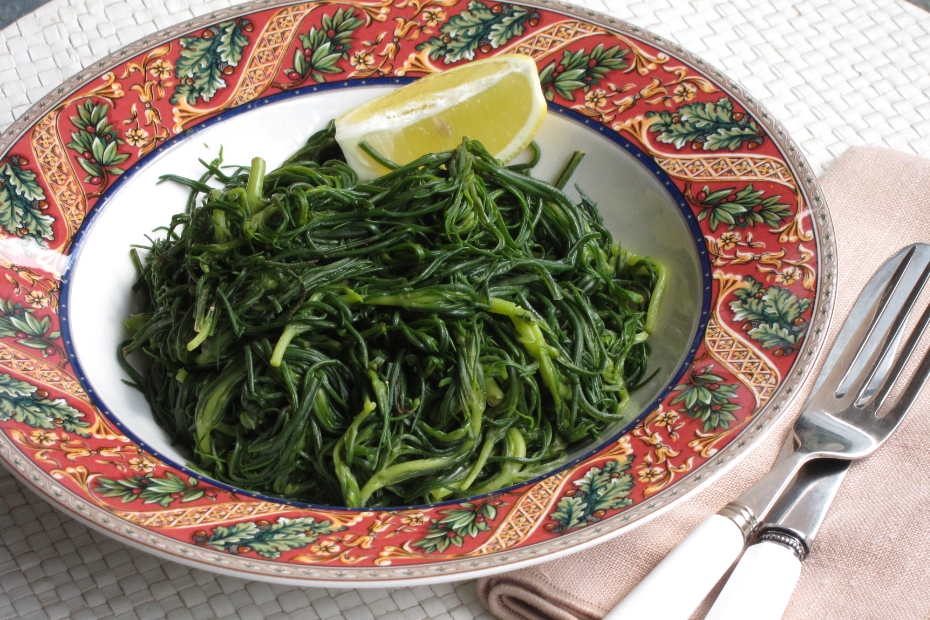
While it might seem odd to a non-Greek cook to boil greens until they are extremely soft, this is the way Greeks like to eat them. In Greek cooking, all sorts of greens, wild and cultivated, sweet and bitter, are boiled, typically in a big pot filled with salted water that is at the point of a rolling boil. Simple as this sounds, there are a few tricks and more than a few opinions regarding the whole boiling vs. blanching vs. sauteeing method of cooking greens.
Boiling is the way to cook Greens as the Greeks do. It will make them soft, softer, in fact, than most non-Greeks are used to eating. We drain them then let them cool to room temperature. Or, we drain, cool and chill.
If you want your greens to be more al dente, wilted, not DOA!, and to have a uniform texture and bright color, then blanching in a big pot of salted, boiling water is the thing to do. Where as boiling for the half hour or so that is typical in a Greek kitchen will literally cook the color-giving chlorophyll out of the greens, blanching for a short time will preserve it. Drain the greens right at the point when they turn bright green, because a few seconds after that they change color to greyish green. Then shock in a bowl of ice water, to stop the cooking process and preserve their color.
The thinner the stalks and stems, the faster the greens will cook. Mustard greens, sinapi in Greek, cook up fast; chard (seskoulo) takes about five minutes. Collards (Lahanides) take longer, at least 10 minutes to soften their thick, almost rubbery stalks.
Whether or not you cover your pot of greens while they boil depends on the results you want. When you cover the pot, you reduce the number of nutrients that dissipate into the air. A covered pot also cooks at a higher temperature than a lidless one, so the vegetables cook more quickly and nutrients have less time to leach out of the greens. But, because of the acid released by the vegetables themselves and because of the heat, the greens lose their vibrant color and turn dull. So, by cooking without a lid you minimize discoloration. Oddly, most traditional Greek cooks recommend cooking greens with the lid half on, half off. You can also retain color by adding an alkali to the water, such as baking soda, but that destroys vitamins, particularly vitamin C, and also breaks down certain cells resulting in greens that are mushy and lifeless.